

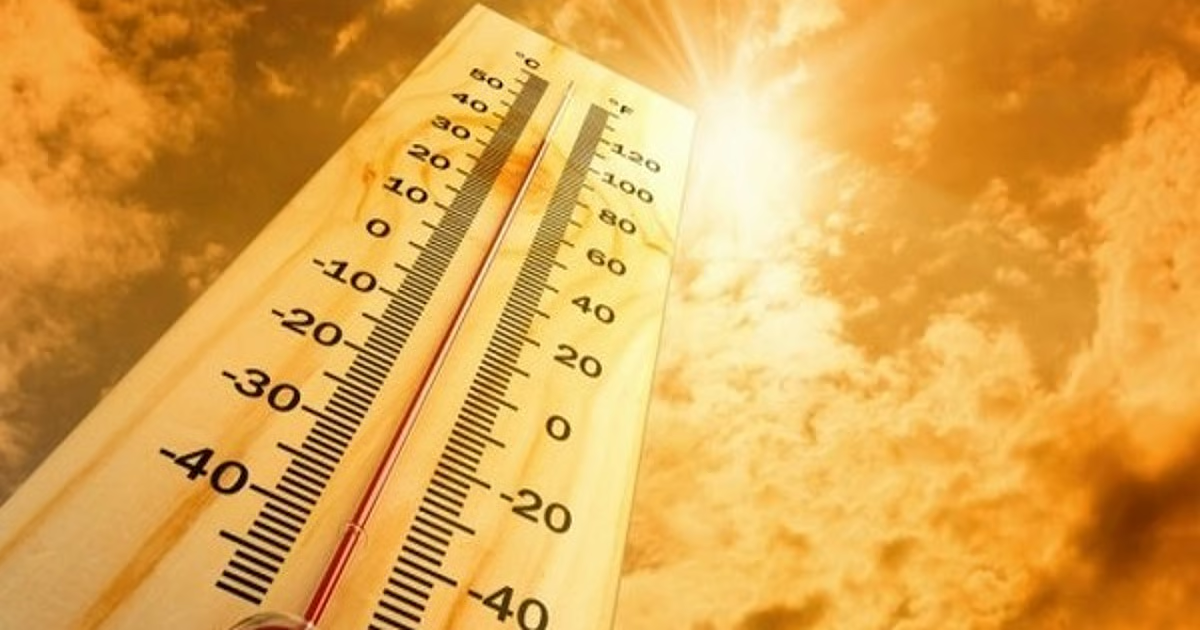
India is facing an extended heatwave phase, with the India Meteorological Department warning of rising temperatures across central and western regions. Cities like Nagpur, Indore, and Rajkot are expected to see prolonged hot conditions, raising concerns about health, infrastructure, and daily life disruptions.
IMD Heatwave Warning and Regional Impact
The IMD heatwave warning highlights a sustained rise in temperatures across parts of Maharashtra, Madhya Pradesh, and Gujarat. In cities such as Nagpur, Indore, and Rajkot, daytime temperatures are already hovering above 42 degrees Celsius and are expected to remain above normal for several consecutive days.
A heatwave, as defined by IMD, occurs when temperatures exceed normal levels by a significant margin, especially in plains where the threshold crosses 40 degrees Celsius. The current pattern is being linked to dry winds and delayed pre-monsoon activity, which usually helps in cooling down land temperatures.
For residents in Tier-2 cities, the impact tends to be sharper due to relatively lower green cover, rapid urbanisation, and limited access to cooling infrastructure compared to metro cities.
Why Cities Like Nagpur, Indore, and Rajkot Are Vulnerable
Heatwave conditions in Nagpur, Indore, and Rajkot are not new, but the intensity and duration have increased in recent years. These cities lie in regions that are naturally prone to high summer temperatures, but changing climate patterns have amplified the severity.
Urban heat island effect is a major contributor. Expanding concrete structures, reduced vegetation, and increasing vehicle emissions trap heat within city limits. In Indore and Rajkot, fast-paced development has added pressure on already strained urban ecosystems.
Nagpur, often referred to as one of the hottest cities in Maharashtra during peak summer, sees compounded effects due to dry inland conditions. The lack of coastal influence means there is little natural moderation in temperature.
Health Risks and Public Safety Concerns
Extended heatwaves pose serious health risks, particularly for vulnerable groups such as children, elderly individuals, and outdoor workers. Common heat-related illnesses include dehydration, heat exhaustion, and heatstroke.
Hospitals in heat-prone regions often report a spike in cases during prolonged heat periods. Symptoms like dizziness, fatigue, and rapid heartbeat should not be ignored, especially when temperatures remain high even during late evening hours.
Public health advisories recommend avoiding direct sun exposure between 12 pm and 4 pm, staying hydrated, and wearing light, breathable clothing. However, for daily wage workers and those in informal sectors, avoiding outdoor work is not always practical.
Power Demand, Water Shortages, and Urban Stress
One of the immediate effects of extended heatwaves is a surge in electricity demand. Air conditioners, coolers, and fans operate at full capacity, often leading to peak load pressure on local power grids. Smaller cities sometimes face power cuts during such periods, further worsening living conditions.
Water availability also becomes a concern. Increased consumption, coupled with evaporation losses, puts pressure on municipal supply systems. In parts of Indore and Rajkot, tanker dependency rises during peak summer, especially in outer areas.
Infrastructure stress is not limited to utilities. Roads can soften under extreme heat, and public transport systems may face operational strain due to overheating components.
Climate Trends and Changing Summer Patterns
The current heatwave pattern is part of a broader climate trend observed across India. Summers are starting earlier and lasting longer, with more frequent extreme temperature events.
Meteorological data over the past decade shows a steady increase in the number of heatwave days in central and western India. Experts attribute this to a combination of global climate change and local environmental degradation.
Delayed or weak pre-monsoon showers have also reduced the natural cooling phase that typically offers relief in April and May. This shift means cities are now experiencing continuous heat stress without significant breaks.
What Residents Can Do to Stay Safe
Adapting to prolonged heatwaves requires both individual and community-level action. Residents can take simple steps like increasing water intake, using curtains or reflective materials to reduce indoor heat, and scheduling outdoor activities during cooler hours.
Local authorities are also stepping up measures such as setting up water kiosks, issuing advisories, and monitoring heat-related illnesses. However, long-term solutions will depend on better urban planning, including increased green spaces and improved water management systems.
Takeaways
- IMD has warned of extended heatwave conditions in central and western India
- Cities like Nagpur, Indore, and Rajkot face higher risk due to climate and urban factors
- Health risks include dehydration and heatstroke, especially for vulnerable groups
- Rising temperatures are increasing pressure on electricity and water resources
FAQs
What is considered a heatwave in India?
A heatwave is declared when temperatures cross 40 degrees Celsius in plains and remain significantly above normal levels for consecutive days.
Why are Tier-2 cities more affected by heatwaves?
They often have less green cover, rapid urban growth, and limited infrastructure to handle extreme weather conditions.
How long will the current heatwave last?
IMD projections suggest that elevated temperatures may continue for several days, depending on regional weather patterns and pre-monsoon activity.
What precautions should people take during a heatwave?
Stay hydrated, avoid peak afternoon sun, wear light clothing, and watch for symptoms of heat-related illnesses.








Leave a comment