

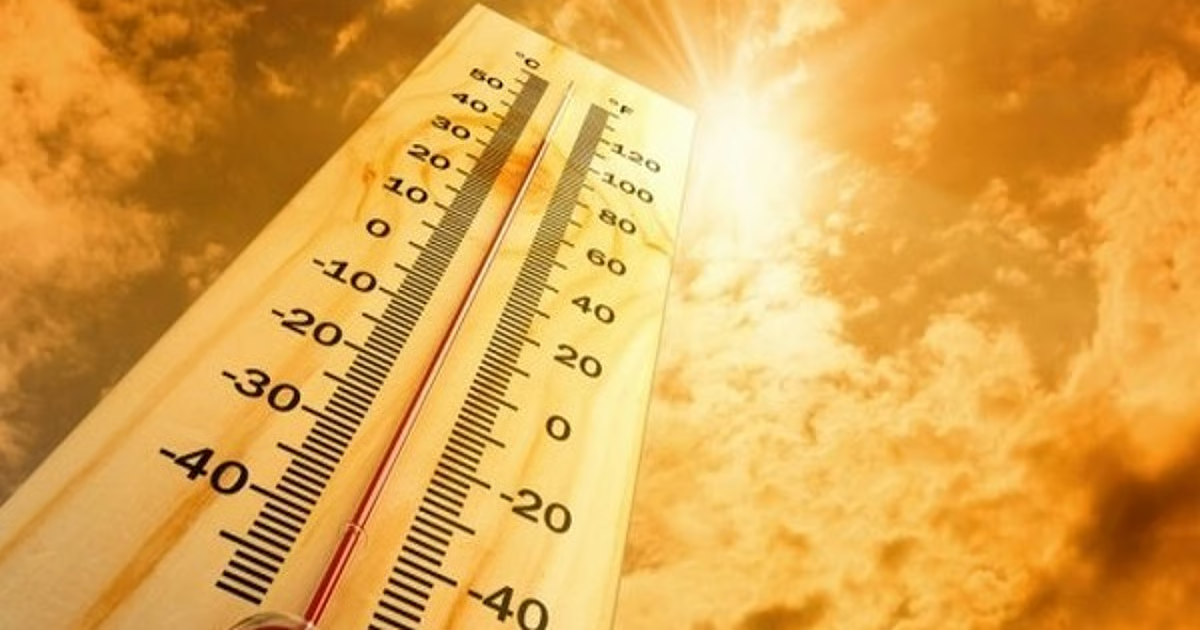
Rising heatwaves and power cuts are becoming a serious concern in summer 2026, especially for smaller Indian cities. As temperatures surge across central and western regions, electricity demand is peaking, exposing infrastructure gaps and affecting daily life in Tier-2 and Tier-3 urban areas.
Rising Heatwaves and Power Cuts in Summer 2026
Rising heatwaves and power cuts have emerged as a major news-driven issue this summer, with several parts of India reporting above-normal temperatures. Cities in Maharashtra, Madhya Pradesh, and Gujarat have seen prolonged heat spells, pushing electricity consumption to record levels.
When temperatures cross 40 degrees Celsius consistently, cooling appliances such as air conditioners, desert coolers, and fans operate continuously. This leads to peak load pressure on power grids. In smaller cities, where infrastructure upgrades often lag behind metros, this demand-supply imbalance results in scheduled and unscheduled power cuts.
Reports from multiple regions indicate that outages are lasting from one to several hours, particularly during afternoon and evening peaks. This pattern highlights how extreme weather is directly affecting urban infrastructure.
Why Tier-2 and Tier-3 Cities Are More Affected
Heatwave impact in Tier-2 cities is often more severe due to limited infrastructure resilience. While metros have relatively stronger power distribution systems and backup networks, smaller cities depend on older grids that struggle under sudden demand spikes.
Urban expansion without proportional upgrades in electricity infrastructure has added pressure. Residential areas, new townships, and commercial zones are increasing consumption, but supply systems have not kept pace.
Another factor is transformer overload. In many semi-urban areas, local transformers are not designed to handle sustained high loads, leading to frequent tripping and breakdowns. Repair times can also be longer due to limited technical resources on the ground.
These issues create a cycle where rising heat increases demand, and weak infrastructure leads to more frequent outages.
Impact on Daily Life and Local Economy
Power cuts during extreme heat affect more than just comfort. They disrupt essential services, small businesses, and household routines. In cities like Nagpur, Indore, and similar regions, residents are facing difficulties in managing basic daily activities.
Small businesses such as shops, workshops, and local service providers rely heavily on electricity. Frequent outages reduce productivity and increase operational costs, especially when backup options like generators are expensive.
Students preparing for exams and individuals working from home also face challenges due to unreliable power supply. In many households, water supply systems are linked to electric pumps, which means outages can also affect access to water.
Healthcare facilities in smaller towns face additional pressure. While major hospitals have backup systems, smaller clinics may struggle to maintain operations during extended cuts.
Government Measures and Power Management Strategies
State governments and electricity distribution companies are taking steps to manage the situation. Load management strategies, including scheduled power cuts and rotational outages, are being implemented to prevent complete grid failure.
Authorities are also appealing to consumers to use electricity responsibly during peak hours. Awareness campaigns encourage limiting the use of high-consumption appliances during the afternoon.
In some regions, efforts are being made to upgrade transformers, repair faulty lines, and improve distribution efficiency. However, these are often short-term measures that may not fully address the scale of the problem.
Renewable energy sources, especially solar power, are being explored as a long-term solution. Rooftop solar installations in smaller cities are gradually increasing, but adoption is still limited.
Heatwave Trends and Growing Energy Demand
The connection between heatwaves and energy demand is becoming more pronounced each year. Meteorological data indicates that heatwave days are increasing in frequency and duration across India.
Longer summers and delayed monsoon patterns mean that cooling demand remains high for extended periods. This puts sustained pressure on electricity systems, especially in regions that are already vulnerable.
Energy experts point out that planning for peak demand is now critical. Infrastructure upgrades, smart grid systems, and better forecasting can help manage load more effectively.
Without long-term planning, the gap between electricity demand and supply is likely to widen, particularly in smaller urban centres.
How Residents Are Adapting to Power Cuts
Residents in smaller cities are finding ways to cope with the dual challenge of heatwaves and power cuts. Many households are investing in inverters and battery backup systems to manage outages.
Traditional cooling methods, such as using earthen pots, wet curtains, and natural ventilation, are also making a comeback. These methods provide partial relief and reduce dependence on electricity.
Some communities are adjusting daily routines, shifting activities to early morning or late evening hours when temperatures are relatively lower and power supply is more stable.
However, these adaptations are temporary solutions. Long-term resilience will depend on infrastructure improvements and better planning at the city level.
The Need for Long-Term Urban and Energy Planning
The current situation highlights the need for integrated urban planning that considers both climate and energy challenges. Cities must invest in stronger power infrastructure, including upgraded grids and decentralized energy systems.
Increasing green cover can help reduce urban heat, lowering overall cooling demand. Energy-efficient buildings and appliances can also play a role in reducing consumption.
Policy-level interventions, such as incentives for renewable energy and stricter building regulations, can support sustainable growth. Coordination between urban development authorities and energy providers will be key.
As climate patterns continue to change, cities that plan ahead will be better equipped to handle future summers.
Takeaways
- Rising heatwaves and power cuts are straining smaller Indian cities in summer 2026
- Tier-2 and Tier-3 cities face greater challenges due to weaker power infrastructure
- Daily life, businesses, and essential services are being affected by frequent outages
- Long-term solutions require infrastructure upgrades and better energy planning
FAQs
Why are power cuts increasing during heatwaves?
Higher temperatures increase electricity demand for cooling, putting pressure on power grids and leading to outages.
Which areas are most affected by this issue?
Tier-2 and Tier-3 cities are more vulnerable due to limited infrastructure and slower upgrades compared to metros.
What can residents do during frequent power cuts?
They can use backup systems like inverters, reduce peak-hour consumption, and adopt traditional cooling methods.
Are there long-term solutions to this problem?
Yes, solutions include upgrading power infrastructure, promoting renewable energy, and improving urban planning.








Leave a comment