

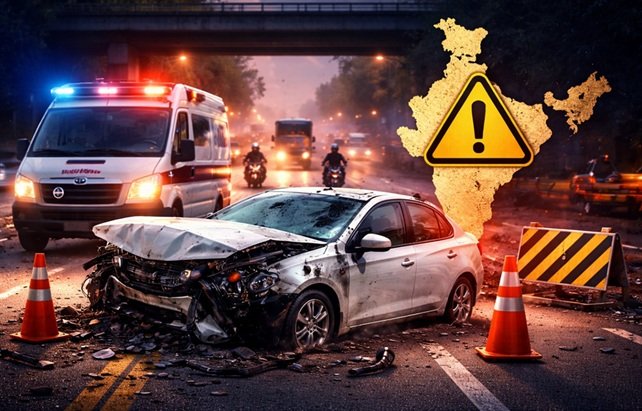
Infrastructure gaps in Tier-2 cities continue to contribute to recurring accidents despite repeated warnings and advisories. From road mishaps to public safety failures, the issue highlights deeper systemic weaknesses in planning, enforcement, and urban development across India’s rapidly growing non-metro regions.
Infrastructure Gaps in Tier-2 Cities: A Persistent Issue
Infrastructure gaps in Tier-2 cities remain a time-sensitive concern, often highlighted after accidents but rarely addressed in a sustained manner. Cities such as Indore, Nagpur, Kanpur, and Rajkot have expanded rapidly over the past decade, driven by population growth and economic activity.
However, infrastructure development has not kept pace with this expansion. Roads, public transport systems, drainage networks, and safety mechanisms often remain outdated or insufficient. This mismatch creates high-risk conditions, especially in densely populated areas.
Warnings from authorities, including traffic advisories and safety notices, are regularly issued. Yet, accidents continue to occur, suggesting that warnings alone are not enough without structural improvements and enforcement.
Road Safety Issues and Traffic Mismanagement
Road safety in Tier-2 cities is one of the most visible areas where infrastructure gaps lead to accidents. Poorly maintained roads, lack of proper signage, and inadequate street lighting increase the risk of collisions.
Traffic management systems are often underdeveloped. Signals may be non-functional, and traffic police presence can be limited during peak hours. In many cities, mixed traffic conditions with pedestrians, two-wheelers, cars, and heavy vehicles sharing the same space create chaotic environments.
Encroachment on roads and illegal parking further reduce usable space, increasing congestion and accident probability. Despite awareness campaigns and enforcement drives, compliance remains inconsistent.
Construction, Urban Expansion, and Safety Oversight
Rapid urban expansion in Tier-2 cities has led to a surge in construction activity. While this reflects economic growth, it also introduces new safety challenges. Construction sites often lack proper barricading, warning signs, and safety measures.
Falling debris, open pits, and unmarked diversions pose risks to both pedestrians and drivers. In some cases, accidents occur due to negligence in following basic safety protocols.
Urban planning authorities issue guidelines for construction safety, but enforcement varies. Smaller cities may lack sufficient manpower to conduct regular inspections, allowing violations to go unchecked.
This gap between regulation and implementation is a recurring factor in accident cases.
Public Infrastructure and Maintenance Challenges
Public infrastructure such as bridges, footpaths, and drainage systems also plays a role in accident risk. Poor maintenance can lead to sudden failures, especially during extreme weather conditions.
For example, waterlogging during monsoon seasons can weaken road surfaces and obscure hazards like potholes. In summer, heat can damage road materials, leading to cracks and uneven surfaces.
Footpaths are often either absent or encroached upon, forcing pedestrians onto roads. This increases the likelihood of accidents involving vehicles.
Maintenance budgets and planning are often reactive rather than preventive. Repairs are typically carried out after complaints or incidents, rather than through regular monitoring.
Role of Enforcement and Accountability
Enforcement of safety rules is a critical factor in preventing accidents, yet it remains inconsistent in many Tier-2 cities. Traffic violations such as speeding, helmet non-compliance, and drunk driving are common contributors to accidents.
While laws and penalties exist, their implementation can be uneven. Limited surveillance systems and manpower constraints make it difficult to monitor violations effectively.
Accountability also extends to multiple agencies, including municipal bodies, traffic departments, and urban planners. Lack of coordination among these entities can delay action and dilute responsibility.
Without strict and consistent enforcement, warnings lose their effectiveness over time.
Public Awareness and Behavioral Factors
Infrastructure alone does not determine safety outcomes. Public behavior plays a significant role in accident prevention. In many Tier-2 cities, awareness about traffic rules and safety practices remains limited.
Pedestrians may cross roads without using designated crossings, and drivers may ignore signals or speed limits. Cultural attitudes toward safety, combined with inadequate enforcement, contribute to risky behavior.
Awareness campaigns are conducted periodically, but their impact is often short-lived. Sustained education efforts, starting from schools and community programs, are needed to create long-term change.
Behavioral shifts, combined with better infrastructure, can significantly reduce accident rates.
Bridging the Gap: What Needs to Change
Addressing infrastructure gaps in Tier-2 cities requires a comprehensive approach. Investment in road quality, traffic management systems, and public safety infrastructure is essential.
Technology can support enforcement through surveillance cameras, automated traffic signals, and data-driven monitoring. Smart city initiatives have introduced some of these elements, but coverage remains uneven.
Urban planning must prioritize safety, with clear guidelines for construction, zoning, and public infrastructure. Regular audits and inspections can help ensure compliance.
Coordination between government agencies, along with community participation, can strengthen accountability. Long-term planning, rather than reactive measures, will be key to reducing accidents.
Takeaways
- Infrastructure gaps in Tier-2 cities contribute to frequent accidents despite warnings
- Road safety issues, construction risks, and poor maintenance are major factors
- Weak enforcement and limited accountability reduce the impact of safety regulations
- Long-term planning and public awareness are essential for improving safety
FAQs
Why do accidents continue despite safety warnings?
Warnings alone are not enough without proper infrastructure, enforcement, and public compliance with safety rules.
Which infrastructure issues are most common in Tier-2 cities?
Poor road conditions, lack of signage, inadequate lighting, and unsafe construction sites are common problems.
How can authorities reduce accident rates?
By improving infrastructure, strengthening enforcement, and using technology for monitoring and management.
What role does public behavior play in accidents?
Unsafe practices such as ignoring traffic rules and lack of awareness significantly increase accident risks.









Leave a comment