

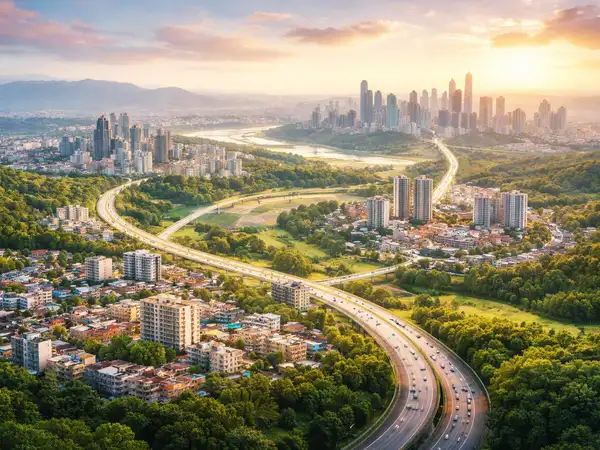
India’s Smart City projects are beginning to show measurable results in several mid-sized cities. From integrated command centers to upgraded roads, public transport and digital services, cities like Indore, Surat, Nagpur and Bhubaneswar are demonstrating how targeted urban investment can improve daily life.
Smart City Projects in 2026: From Vision to Visible Impact
The Smart City Mission, launched in 2015, was designed to improve urban infrastructure, governance and quality of life in 100 selected cities. In 2026, the focus has shifted from project announcements to actual outcomes.
Smart City projects in India now include intelligent traffic systems, public surveillance, LED street lighting, smart water management, digital citizen services and modern public spaces.
While progress varies across the country, several Tier-2 cities have delivered visible improvements. These cities are proving that urban transformation is not limited to metros like Delhi, Mumbai and Bengaluru.
Indore Smart City: Governance and Cleanliness Driving Change
Indore is often cited as one of the strongest examples of successful smart city implementation.
Known for repeatedly topping India’s cleanliness rankings, Indore has combined civic discipline with technology-based governance. The city has developed an Integrated Command and Control Centre that monitors traffic, waste collection and emergency response systems.
Digital services have made it easier for residents to access municipal information and lodge complaints. Public transport upgrades and road improvements have further strengthened the city’s urban infrastructure.
Indore shows how efficient administration can turn smart city investments into practical benefits for citizens.
Surat Smart City: Technology Supporting Urban Efficiency
Surat has used smart technology to improve transportation, safety and public service delivery.
The city has implemented surveillance systems, adaptive traffic management and digital monitoring tools. Surat’s municipal administration has also integrated data systems to improve decision-making and emergency response.
Already known for its strong textile and diamond industries, Surat has leveraged its business culture to adopt technology quickly.
The result is a city where smart city projects complement economic growth and improve urban management.
Nagpur Smart City: Mobility and Public Infrastructure Upgrades
Nagpur has focused its Smart City efforts on transportation, digital governance and public infrastructure.
The city’s command center supports traffic control, surveillance and municipal coordination. Road improvements, public Wi-Fi zones and technology-enabled services have enhanced urban convenience.
Nagpur Metro and the broader MIHAN development have added momentum to the city’s transformation.
Together, these projects are helping Nagpur strengthen its position as one of central India’s most important growth centers.
Bhubaneswar Smart City: A Model for Urban Planning
Bhubaneswar was ranked highly in early Smart City assessments and remains a benchmark for planned urban development.
The city has invested in public spaces, transit systems, pedestrian infrastructure and digital governance. The Bhubaneswar Town Centre District project has become a notable example of integrated urban redevelopment.
Its focus on citizen engagement and long-term planning has made Bhubaneswar a frequently cited success story.
What Real Change Looks Like for Residents
For most citizens, a successful Smart City project is judged by everyday improvements.
Reduced traffic congestion, faster emergency response, better street lighting, cleaner neighborhoods and easier access to municipal services are the most visible outcomes.
Digital dashboards and command centers may operate in the background, but their value lies in making cities more responsive and efficient.
When implemented well, smart infrastructure saves time and improves public safety.
Challenges Facing Smart City Projects in India
Despite notable progress, not every city has delivered the same results.
Some projects have faced delays, cost overruns and maintenance challenges. In a few cases, technology was deployed without adequate integration into broader urban planning.
Experts have also noted that long-term success depends on local governance capacity, funding and citizen participation.
Smart city infrastructure must be maintained and continuously updated to remain effective.
Why Mid-Sized Cities Stand to Benefit the Most
Tier-2 cities are often better positioned to implement urban reforms because they face less congestion and lower legacy infrastructure constraints than major metros.
Targeted investments can produce visible changes more quickly and at lower cost.
As these cities attract businesses and population growth, strong urban infrastructure becomes essential.
The progress seen in Indore, Surat, Nagpur and Bhubaneswar suggests that mid-sized cities may lead India’s next phase of urban development.
Key Takeaways
- Smart City projects in 2026 are delivering visible improvements in several Tier-2 cities.
- Indore, Surat, Nagpur and Bhubaneswar are among the strongest examples of measurable progress.
- Key benefits include better traffic management, digital governance and improved public services.
- Long-term success depends on maintenance, planning and local administrative efficiency.
FAQs
What is the Smart City Mission in India?
It is a government initiative launched in 2015 to improve infrastructure, governance and quality of life in selected cities.
Which Indian cities are considered Smart City success stories?
Indore, Surat, Nagpur and Bhubaneswar are widely recognized for visible and sustained improvements.
How do Smart City projects help ordinary citizens?
They improve transportation, safety, sanitation, public lighting and access to civic services.
Are all Smart City projects successful?
No. Results vary depending on execution, funding, governance and long-term maintenance.










Leave a comment