

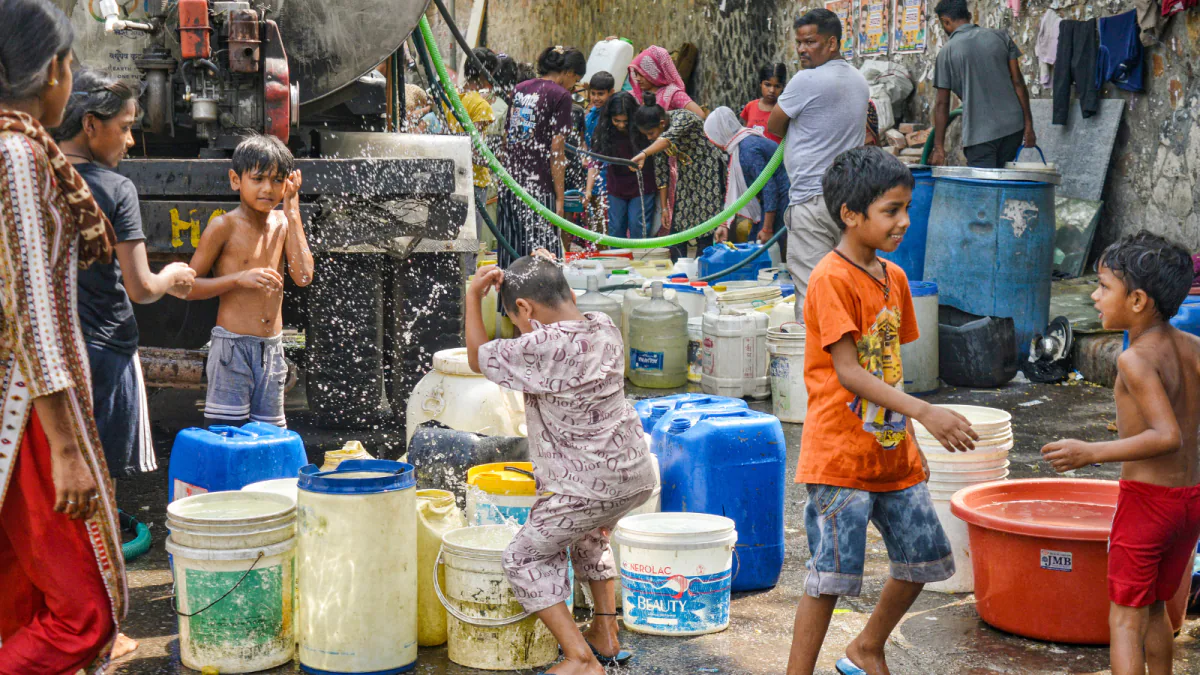
Water stress in smaller Indian cities is becoming a major concern as temperatures rise and reservoir levels come under pressure before summer 2026. Municipal administrations across Tier-2 and Tier-3 cities are rolling out contingency plans to secure drinking water and manage demand.
Why Water Stress Is Intensifying in Tier-2 and Tier-3 Cities
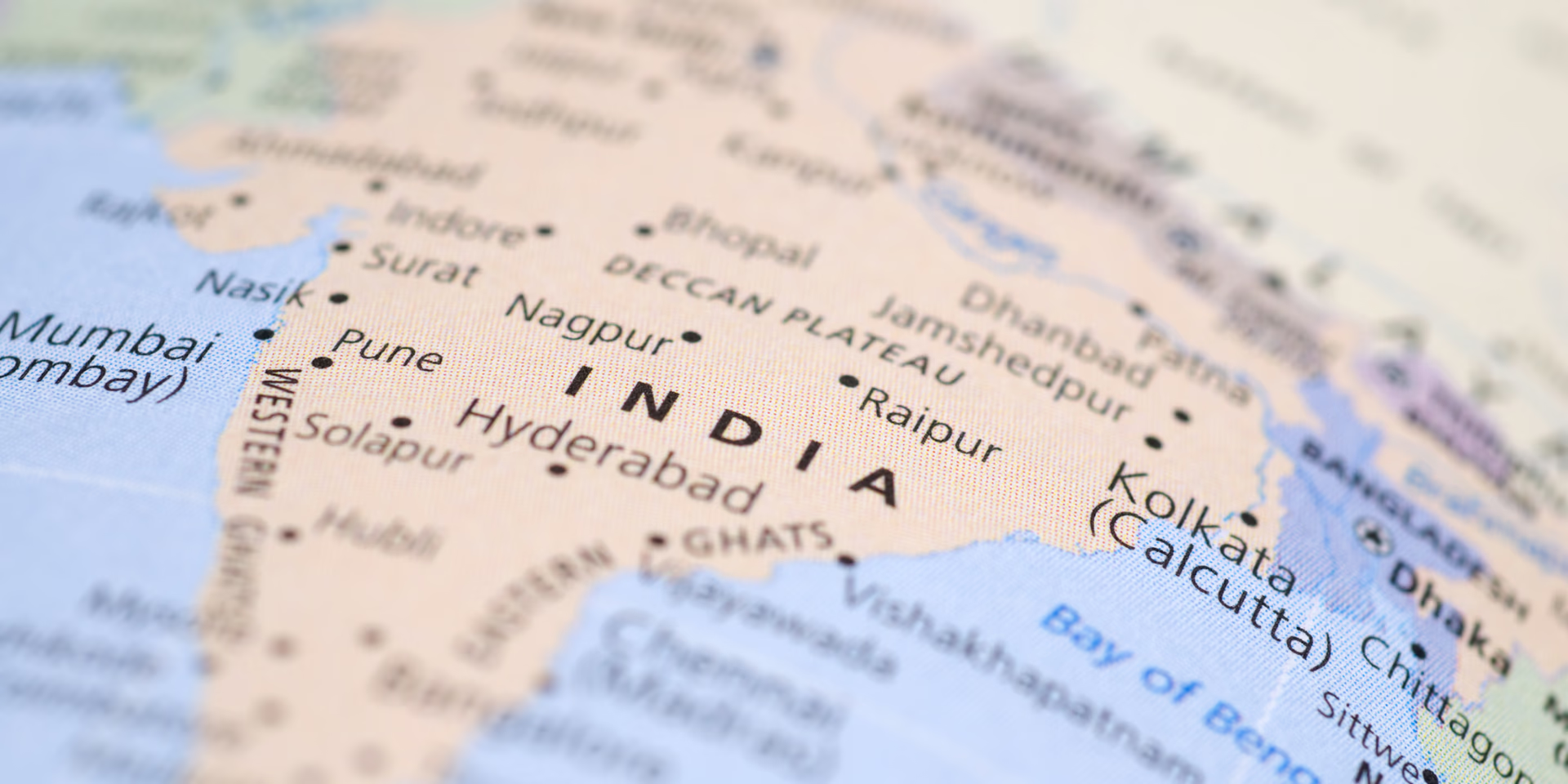
Water stress in smaller Indian cities has been building for years due to rapid urban growth, erratic rainfall and overdependence on limited water sources. Cities such as Nagpur, Nashik, Aurangabad, Hubballi, Gwalior and Jodhpur have expanded significantly, but infrastructure upgrades have not always kept pace.
Many urban centers depend on dams, lakes and groundwater. When monsoon rainfall is uneven or below normal, these systems face pressure sooner than expected.
Rising temperatures increase household consumption, while leakage in aging pipelines leads to significant losses before water even reaches consumers.
As a result, local administrations are entering summer 2026 with a stronger focus on preparedness.
Municipal Water Planning Begins Months Before Peak Summer
Most municipal corporations begin summer water planning during late winter.
Officials review reservoir storage, assess groundwater availability and estimate demand for the coming months. Based on these projections, civic bodies may revise supply schedules, arrange additional tanker services and identify neighborhoods that are historically vulnerable.
Cities often create emergency response teams involving engineers, public health officials and local administrators.
The objective is to prevent sudden shortages rather than react after complaints increase.
This planning process has become more data-driven as cities adopt digital monitoring tools and automated reporting systems.
Reservoir Monitoring and Groundwater Management
Reservoir monitoring is central to summer preparedness.
Local authorities track storage levels in major dams and compare them with previous years. If stocks are lower than expected, administrations may implement conservation measures early.
Groundwater is another critical source, particularly in areas on the urban fringe. Municipalities inspect borewells, repair pumps and monitor water quality to ensure safe usage.
Some cities have restricted non-essential water use, including vehicle washing and garden irrigation, when supply conditions tighten.
These measures help extend available resources during the hottest months.
Tanker Supply and Emergency Distribution Plans
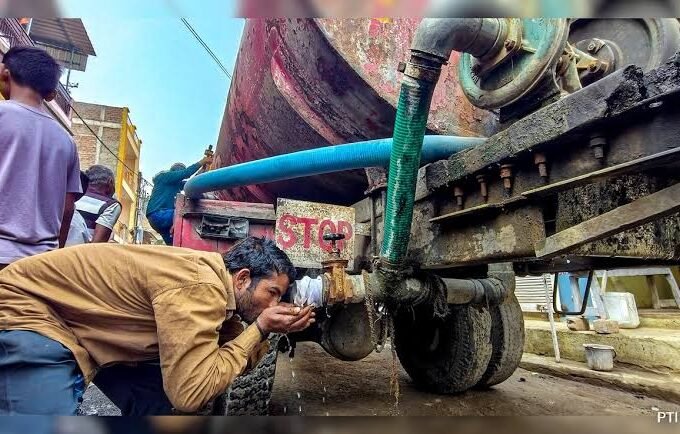
When regular water supply is insufficient, tanker operations become essential.
Municipal corporations usually prepare lists of approved tanker contractors and designate filling points in advance. GPS tracking is increasingly used to improve accountability and reduce delays.
Priority is typically given to hospitals, schools and densely populated residential areas.
Cities also set up complaint helplines and mobile applications so residents can report disruptions.
Although tanker supply is expensive, it remains an important short-term tool during severe shortages.
Reducing Water Loss Through Infrastructure Repairs
A substantial share of treated water is lost due to leaks, illegal connections and outdated pipelines.
To address this, local administrations often intensify repair work before summer. Maintenance teams inspect major transmission lines and replace damaged valves and meters.
Some cities are implementing district metered areas to identify where losses are highest.
Reducing non-revenue water can significantly improve supply without developing new sources.
For resource-constrained municipalities, this is one of the most cost-effective interventions.
Public Awareness Campaigns Encourage Responsible Use
Water conservation depends not only on infrastructure but also on consumer behavior.
Municipalities frequently launch campaigns urging residents to fix leaks, store water carefully and avoid wastage.
Schools, resident welfare associations and local media play a key role in spreading these messages.
In many cities, public cooperation helps reduce peak demand and eases pressure on the distribution network.
The challenge is maintaining awareness beyond periods of acute shortage.
Long-Term Solutions for Urban Water Security
Short-term measures can help cities get through one season, but long-term water security requires structural changes.
Rainwater harvesting, wastewater recycling and watershed restoration are becoming increasingly important.
Cities are also investing in smart metering and stronger groundwater regulation.
As urban populations continue to grow, water planning will need to be integrated into broader development decisions involving housing, industry and land use.
What Summer 2026 Will Reveal
Summer 2026 will test how effectively smaller Indian cities have strengthened their water management systems.
Cities that combine early planning, infrastructure maintenance and public participation are likely to cope better.
Those with limited storage, high leakage and weak coordination may continue to face recurring shortages.
For residents, the season will highlight how critical local governance is to ensuring reliable access to safe drinking water.
Key Takeaways
- Water stress is increasing in many Tier-2 and Tier-3 Indian cities.
- Municipal administrations are monitoring reservoirs and preparing tanker plans.
- Pipeline repairs and leak reduction can significantly improve supply.
- Long-term solutions include rainwater harvesting and wastewater reuse.
Frequently Asked Questions
Why are smaller Indian cities facing water stress?
Rapid urbanization, variable rainfall, groundwater depletion and aging infrastructure are major factors.
How do municipal corporations prepare for summer shortages?
They monitor reservoir levels, repair infrastructure, arrange tanker services and promote conservation.
What role does groundwater play?
Groundwater acts as an important backup source, especially where surface water supplies are limited.
Can residents help reduce water stress?
Yes. Fixing leaks, using water efficiently and supporting rainwater harvesting can make a meaningful difference.







Leave a comment