

India’s e-commerce growth in 2026 is increasingly being driven by Tier-2 and Tier-3 cities instead of major metros. Rising internet access, affordable smartphones, digital payments, and faster logistics networks are helping smaller cities become the next big market for online shopping platforms and D2C brands.
India’s e-commerce sector is entering a new phase in 2026, and Tier-2 cities are at the center of this transformation. For years, online shopping growth was concentrated in metros like Mumbai, Delhi, Bengaluru, and Hyderabad. That trend is now changing rapidly.
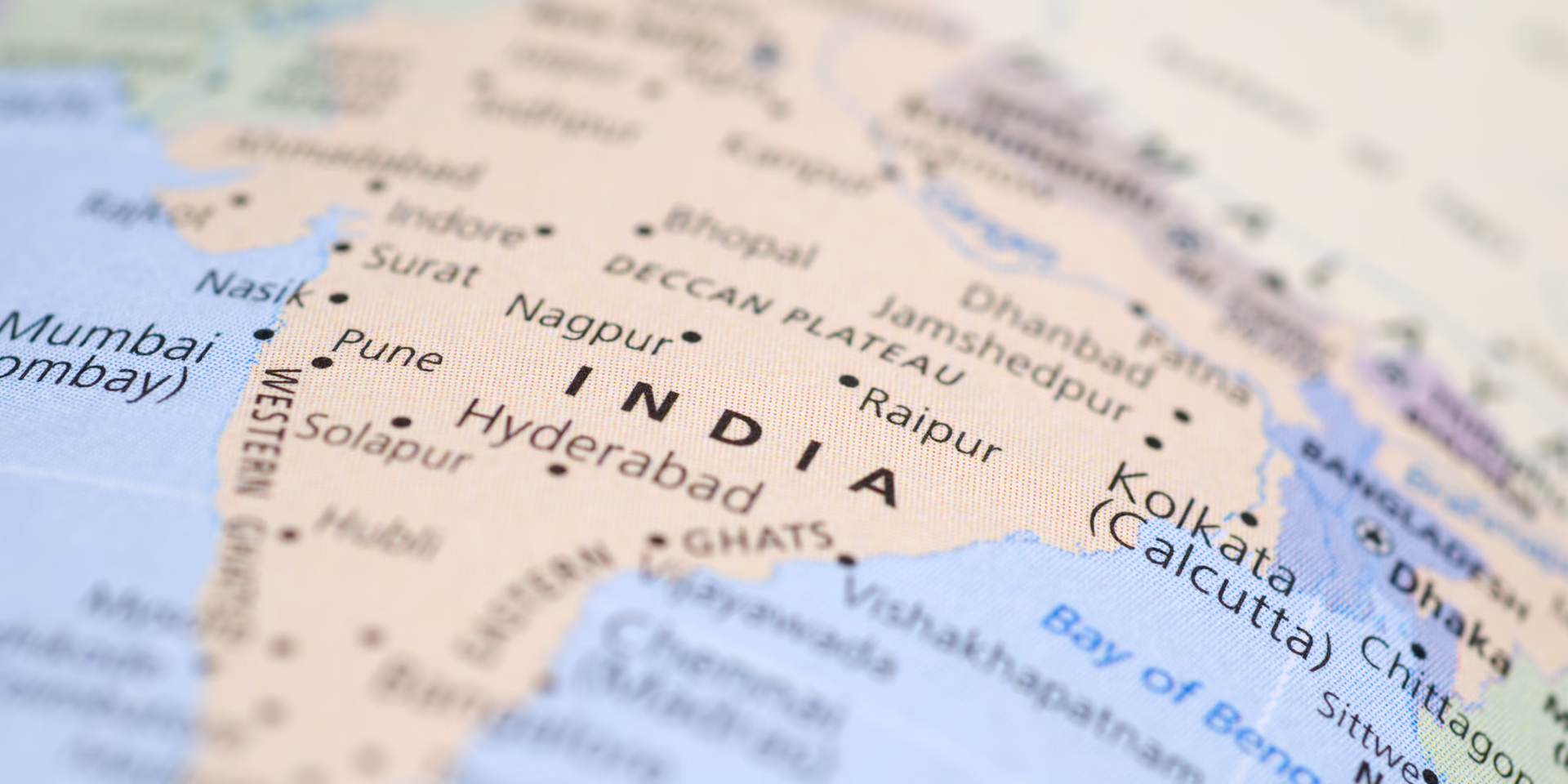
Cities such as Nagpur, Indore, Surat, Jaipur, Lucknow, Patna, Coimbatore, and Bhubaneswar are witnessing a major rise in digital consumers. E-commerce companies are increasingly targeting these regions because customer growth in metro cities has started to mature, while smaller cities still offer massive untapped demand.
Industry reports from leading consulting firms and retail platforms show that a large share of new online shoppers in India now comes from non-metro regions. This shift is reshaping how brands market products, build logistics networks, and design shopping experiences.
Affordable Internet and Smartphones Are Driving Online Shopping
One of the biggest reasons behind the e-commerce boom in Tier-2 cities is affordable internet access. India now has some of the lowest mobile data prices globally, making digital access easier for millions of users.
At the same time, budget smartphones have become widely available. Even middle-income households in smaller cities now rely heavily on mobile apps for shopping, payments, entertainment, and communication.
This combination has created a strong digital consumer base outside metro regions. Many first-time online shoppers are now coming from semi-urban India, especially younger consumers aged between 18 and 35.
Platforms such as Amazon, Flipkart, Meesho, Myntra, and JioMart have also expanded regional language support to attract users from Hindi-speaking and regional-language markets. This has made online shopping easier for people who are more comfortable browsing in their native language.
Tier-2 Consumers Are Spending More Across Categories
The behavior of online shoppers in Tier-2 cities has changed significantly over the last few years. Earlier, customers mainly purchased low-cost essentials online. In 2026, spending patterns are becoming more diverse.
Consumers are now buying smartphones, electronics, fashion products, beauty items, furniture, home appliances, and even luxury products online. Fashion and beauty categories have shown particularly strong growth among young consumers in smaller cities.
Another major trend is the rise of Direct-to-Consumer brands. Many Indian D2C companies are focusing heavily on non-metro regions because customer acquisition costs are often lower compared to metro markets.
Smaller cities are also responding positively to influencer marketing and social commerce. Local creators on Instagram, YouTube, and short-video platforms are influencing buying decisions more than traditional celebrity advertising in many cases.
Logistics and Digital Payments Have Improved Rapidly
Faster deliveries are another reason why e-commerce adoption is accelerating in Tier-2 India. Over the last few years, logistics companies and e-commerce platforms have expanded warehouses, fulfillment centers, and last-mile delivery networks across smaller cities.
Many locations that once took seven to ten days for deliveries now receive products within two or three days. Faster shipping has improved customer trust and repeat purchases.
Digital payments have also become more reliable and widely accepted. UPI transactions continue to grow rapidly across India, including in smaller towns. Consumers are now comfortable making online payments through apps such as PhonePe, Google Pay, Paytm, and BHIM.
Cash-on-delivery still remains popular in some regions, but digital payment adoption has increased sharply after the expansion of UPI and banking access.
Local Businesses Are Joining the E-Commerce Ecosystem
Another important shift in 2026 is the participation of small local businesses in online marketplaces. Earlier, many small retailers depended entirely on physical footfall. Today, thousands of local sellers are using Amazon, Flipkart, Meesho, and WhatsApp Business to reach customers nationwide.
This has created new opportunities for entrepreneurs in smaller cities. Handmade products, regional snacks, textiles, local fashion, and homegrown brands are finding buyers beyond their local markets.
Government initiatives supporting digital business adoption and MSME growth have also encouraged more sellers to go online. Training programs around digital payments, online cataloging, and logistics are helping traditional businesses modernize faster.
Challenges Still Exist for Smaller Markets
Despite rapid growth, Tier-2 e-commerce expansion still faces several challenges. Delivery infrastructure remains inconsistent in some semi-rural areas. Product return logistics can also be difficult outside major cities.
Digital fraud and fake online offers remain concerns for first-time internet users. Customer education continues to be important, especially for financial transactions and online safety.
At the same time, competition among e-commerce companies is increasing. Platforms are spending heavily on discounts, regional marketing, and creator partnerships to attract smaller-city consumers.
Still, most industry experts believe the long-term growth potential remains extremely strong because India’s next wave of internet users will largely come from non-metro regions.
What This Means for India’s Digital Economy
The rise of Tier-2 cities as India’s new e-commerce growth engine reflects a larger economic shift. Smaller cities are no longer just secondary consumer markets. They are becoming central to India’s digital economy.
This transformation is creating jobs in logistics, warehousing, digital marketing, content creation, customer support, and online retail operations. It is also helping local entrepreneurs compete on a national level.
As internet access continues expanding and consumer confidence improves, Tier-2 India is expected to play an even bigger role in shaping the country’s online retail future over the next decade.
Key Takeaways
- Tier-2 cities are driving the majority of India’s new e-commerce user growth in 2026
- Affordable smartphones, cheap internet, and UPI payments are accelerating adoption
- Fashion, electronics, beauty, and D2C brands are growing rapidly in smaller cities
- Local businesses and regional creators are becoming important parts of India’s digital commerce ecosystem
FAQ
Why are Tier-2 cities important for India’s e-commerce growth?
Tier-2 cities have a large population of first-time digital consumers. Metro markets are becoming saturated, while smaller cities still offer major growth opportunities for online retailers.
Which Indian cities are leading this trend?
Cities such as Nagpur, Indore, Jaipur, Surat, Lucknow, Patna, Coimbatore, and Bhubaneswar are seeing strong e-commerce expansion.
What products are popular in Tier-2 markets?
Fashion, beauty products, smartphones, home appliances, electronics, and affordable lifestyle products are among the fastest-growing categories.
How are local businesses benefiting from e-commerce?
Small businesses can now sell products nationwide through online marketplaces and social commerce platforms, helping them expand beyond local customers.








Leave a comment